
What Skills Are Needed for Testing AI Systems (Chatbots/Voice Bots)?

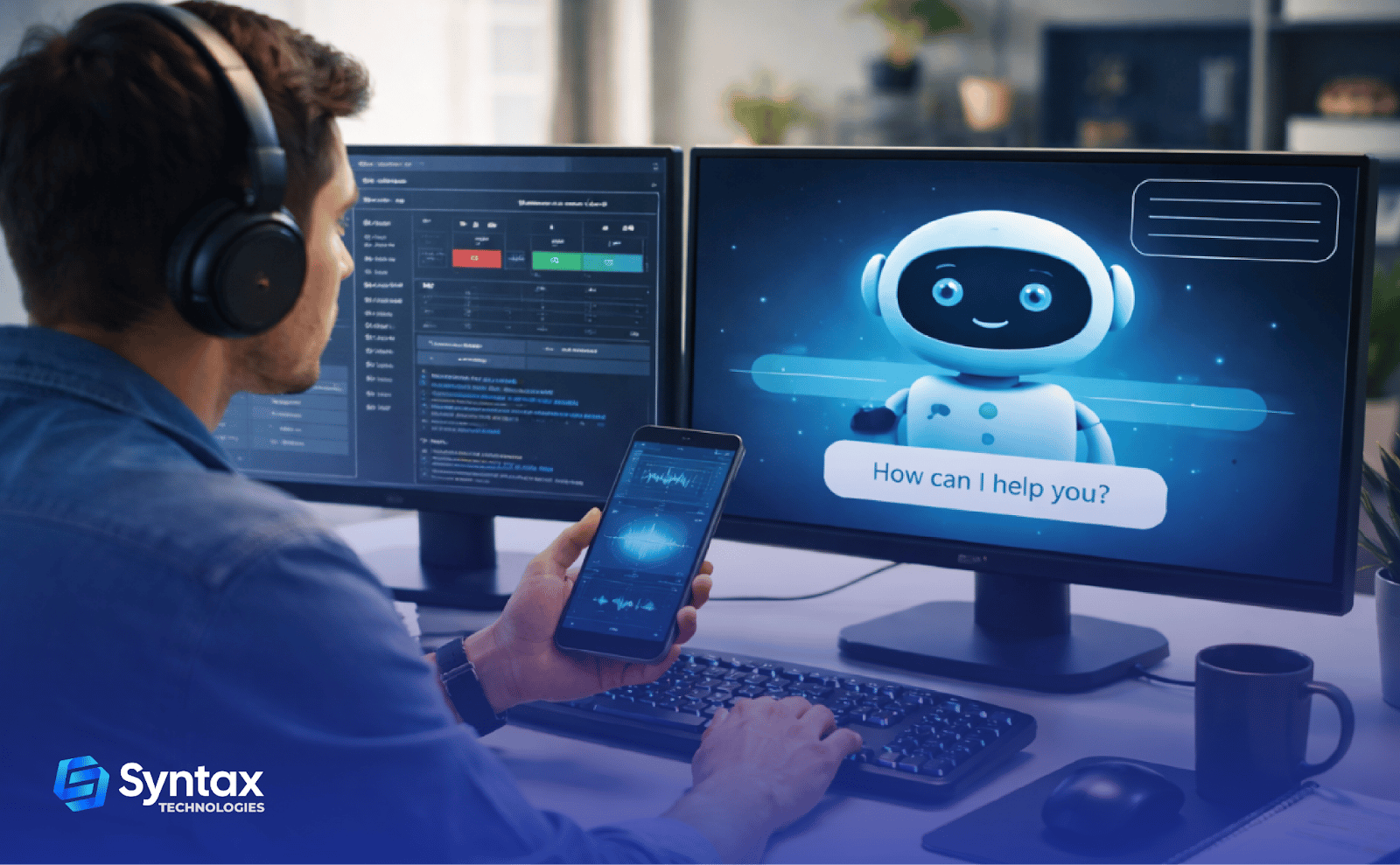
AI chatbots are resolving customer complaints. Voice bots are booking appointments. Banking assistants are helping users transfer money — all without a human agent stepping in.
From e-commerce to healthcare to fintech, AI systems are now directly interacting with millions of users every day.
But here’s the real question: Who tests these AI systems before they go live?
Testing AI isn’t like testing traditional software. You’re not just validating buttons and fixed outputs. You’re testing behavior, intent recognition, language understanding, edge cases, and unpredictable user inputs.
For QA engineers and automation testers, this shift isn’t optional. It’s an opportunity. AI testing is quickly becoming the next big career move — and those who upskill early will have the edge.
Why Testing AI Systems Is Different from Traditional Testing
In traditional systems, you expect predictable behavior.
You click a button → it performs a defined action. You send an API request → you validate a fixed response.
But AI systems don’t behave like that.
A chatbot doesn’t return the same answer every time. It interprets intent. It learns from data. It responds probabilistically.
For example:
If a user types:
- “I want to cancel my order.”
- “How do I return something?”
- “This product isn’t working. What now?”
All three might map to the same intent — but the wording is different.
Now imagine voice bots.
- Speech recognition errors.
- Accent variations.
- Background noise.
- Context switching mid-conversation.
You’re no longer just testing buttons. You’re testing:
- Intent recognition
- Entity extraction
- Context retention
- Ambiguous inputs
- Edge cases
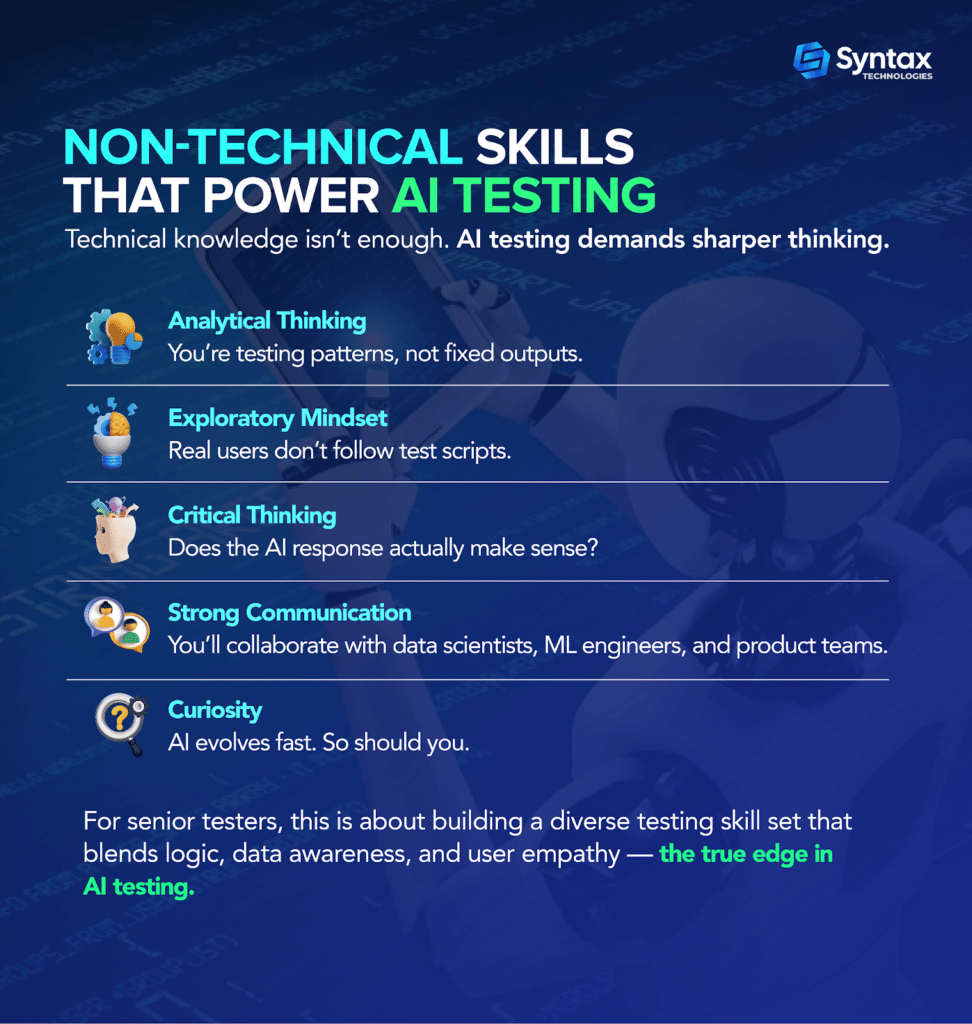
That’s why building a diverse testing skill set becomes essential in AI testing.
Core Technical Skills Required for Testing AI Systems
If you’re serious about how to upskill in software testing for AI systems, this is where you focus. AI testing builds on traditional automation — but goes several layers deeper.
1. Strong Automation Testing Foundation
Before moving into AI, your automation basics must be solid.
You should be comfortable with:
- Selenium or other UI automation tools
- API testing (Postman, RestAssured)
- CI/CD pipelines
- Regression automation frameworks
AI systems change frequently as models retrain and responses evolve. That makes automation even more critical.
If you’re exploring how to update automation testing skills, start by strengthening API-driven automation and making your frameworks more flexible. For many professionals, upskilling for QA automation engineers now means going beyond UI scripts and understanding backend intelligence.
2. Understanding AI & Machine Learning Basics
You don’t need to become a data scientist. But you do need clarity on:
- Supervised vs. unsupervised learning
- Training data vs. test data
- Model accuracy and confidence scores
- Overfitting
When a chatbot claims 85% accuracy, what happens in the remaining 15%? As a tester, that’s your risk zone. For those upskilling as experienced automation tester, understanding ML fundamentals helps you validate model behavior instead of just validating screens.
3. NLP & Conversational Flow Testing
Chatbots and voice bots run on Natural Language Processing (NLP). That changes everything.
You must test:
- Intent recognition
- Entity extraction (dates, names, IDs)
- Multi-turn conversations
- Context retention
Users don’t speak in perfect sentences. They use slang, typos, incomplete queries, and even sarcasm. This is where building a diverse testing skill set becomes essential. Traditional test cases won’t cover real-world language variability.
4. API & Backend Validation
Every AI chatbot sits on top of APIs and backend services.
You need to validate:
- API payload structure
- Model response data
- Confidence scores
- Response time
- Logs and monitoring
For senior professionals, this is a powerful way of adding skills for senior testers who want to move toward AI-aware SDET roles.
5. Data Validation & Bias Testing
AI systems are only as good as their training data.
Testers must check:
- Dataset quality and balance
- Missing or skewed data
- Gender, cultural, or linguistic bias
- Ethical response handling
AI testing is not just functional testing — it’s responsible testing.
If you’re thinking about long-term upskilling for QA automation engineers, this is the layer that differentiates AI testers from traditional automation engineers.
How QA Engineers Can Transition into AI Testing
If you’re wondering how to upskill in software testing for AI-driven systems, the shift is more practical than you think. You don’t start from scratch — you build on your existing automation foundation.
Start with the essentials:
- Learn Python basics (widely used in AI ecosystems).
- Strengthen API testing and backend validation.
- Understand NLP fundamentals and conversational workflows.
- Design chatbot-specific test scenarios (intent variations, multi-turn flows, edge cases).
- Experiment with open-source chatbot frameworks or AI APIs.
If you’re upskilling as experienced automation tester, focus on model validation, log analysis, performance testing for conversational systems, and response confidence checks.
For many professionals, how to update automation testing skills now means shifting from UI-heavy automation to API-first, data-aware testing strategies.
True upskilling for QA automation engineers in the AI space involves understanding how models behave, how data impacts outputs, and how to validate intelligent responses — not just verify functionality.
This transition is incremental. Start small, integrate AI-focused scenarios into your current automation projects, and gradually expand. That’s how you move from traditional QA to AI-aware testing without disrupting your career path.
Many QA professionals looking to transition into modern testing roles also explore structured SDET programs like the one offered by Syntax Technologies, which focus on automation, APIs, and real-world testing scenarios. These skills can be especially useful when testing AI-powered systems such as chatbots and voice assistants.
Final Thoughts
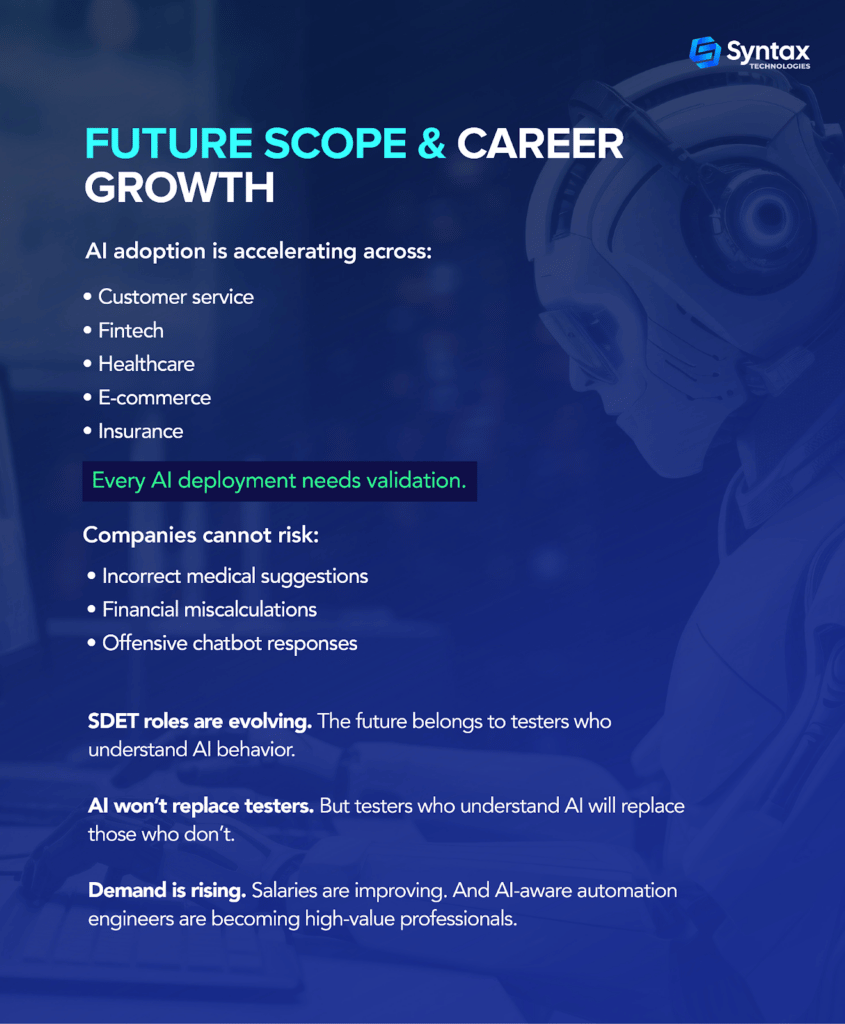
AI systems are already shaping how businesses interact with customers. That means testing them isn’t optional — it’s critical. But AI testing goes beyond traditional QA. It requires understanding behavior, data, intent, and real-world unpredictability.
For QA engineers and automation testers, this is a clear opportunity. If you’re thinking about how to upskill in software testing, moving toward AI-focused testing is one of the smartest steps you can take. Whether it’s upskilling for QA automation engineers or upskilling as an experienced automation tester, those who adapt to intelligent systems will stay ahead.
AI isn’t replacing testers. It’s upgrading the role. The real question is simple: are you ready to upgrade with it?