
Is It Worth Learning Python?


If you’re thinking about learning programming, one question probably comes up early: Is it worth learning Python?
The Python programming language has become one of the most in-demand tech skills in the world. From data science and artificial intelligence to web development and automation, Python powers many of today’s fastest-growing technologies.
That’s why beginners, career switchers, and tech professionals are all asking the same thing: should you learn Python in 2026?
The short answer is yes. Python is beginner-friendly, highly versatile, and strongly connected to some of the most exciting Python career opportunities in the tech industry today.
In this guide, we’ll explore why learn Python, what Python jobs look like today, and whether investing time to learn Python in 2026 is the right move for your career.

What Is Python and Why Is It So Popular?
Python is a high-level programming language designed to be simple, readable, and versatile. It was created with a clear philosophy: code should be easy to read and easy to write.
Unlike many older programming languages that can look complex or cryptic, Python uses syntax that resembles plain English.
For example, a simple Python program might look like this:
Code
print(“Hello, world!”)
That simplicity is one of the biggest reasons Python for beginners has become so popular.
But ease of learning isn’t the only factor behind its growth. Python’s popularity also comes from its flexibility. It can be used for many different purposes, including:
- Web development
- Data analysis
- Machine learning
- Automation
- Scientific computing
- Cybersecurity
- Cloud applications
Because of this versatility, companies across many industries rely on Python, from startups to major tech firms.
Top Reasons Why Learning Python Is Worth It
1. Beginner-Friendly Syntax
One of the biggest Python programming benefits is how easy it is to understand.
Unlike languages that require complicated syntax, Python focuses on readability. That means beginners can focus on learning programming concepts rather than fighting confusing code.
This makes it one of the best choices for people starting their programming journey.
2. High Demand in the Job Market
The demand for Python skills has grown rapidly in recent years.
Many companies now list Python as a required or preferred skill in job postings related to:
- Data Science
- Artificial Intelligence
- Software Development
- Automation
- Cloud Engineering
As businesses continue adopting data-driven technologies, the demand for Python jobs is expected to remain strong.
3. Versatility Across Industries
Few programming languages are as flexible as Python.
With one language, you can work in areas like:
- Healthcare Analytics
- Fintech Platforms
- E-commerce Systems
- AI Startups
- Marketing Analytics
For example, a healthcare company might use Python to analyze patient data, while an e-commerce platform might use it to build recommendation systems.
This versatility makes learning Python a smart long-term investment.
4. Huge Developer Community
Another major advantage of Python is its global developer community.
Millions of developers contribute to Python libraries, tutorials, and forums. If you get stuck while learning, chances are someone has already solved the same problem online.
This strong ecosystem makes learning and troubleshooting much easier.
5. Powerful Libraries and Frameworks
Python offers thousands of libraries that make development faster.
Some popular ones include:
- Pandas for data analysis
- NumPy for numerical computing
- TensorFlow and PyTorch for machine learning
- Django and Flask for web development
Instead of building everything from scratch, developers can use these tools to create powerful applications quickly.
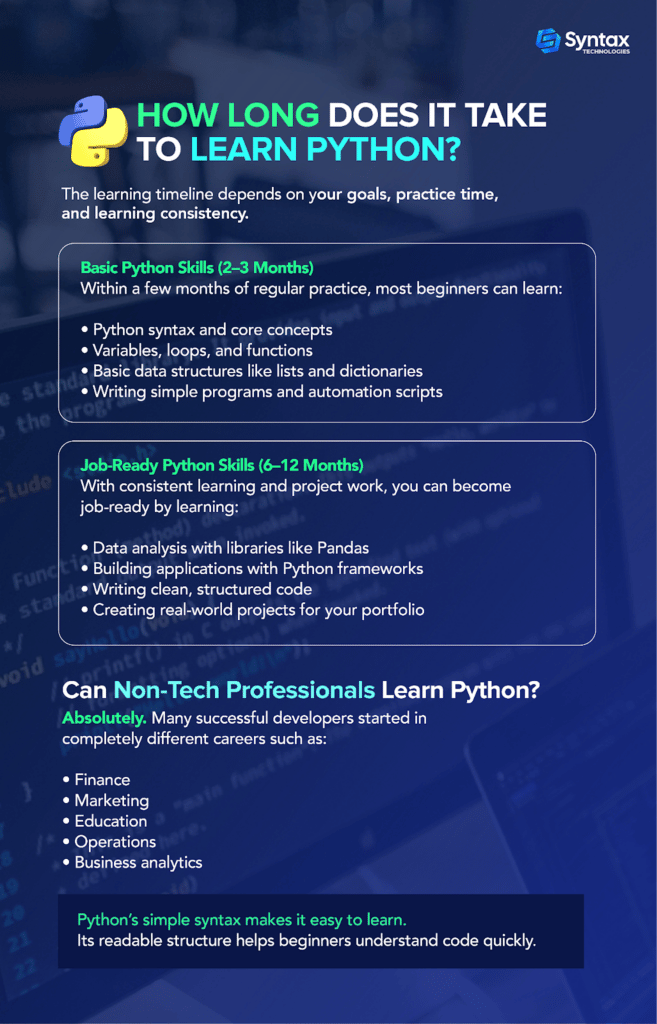
Career Opportunities After Learning Python
Learning Python can open doors to many tech careers. Some popular Python career opportunities include:
- Data Analyst
Data analysts use Python to clean, analyze, and visualize data. Tools like Pandas and Matplotlib help transform raw data into insights.
Industries using Python data analysis include finance, marketing, healthcare, and retail.
- Software Developer
Python developers build web applications, backend systems, and APIs. Frameworks like Django make it easier to create scalable applications.
- Machine Learning Engineer
Machine learning engineers build AI models using Python libraries such as TensorFlow and Scikit-learn.
These professionals work on technologies like recommendation engines, fraud detection systems, and predictive analytics.
- Automation Engineer
Python is widely used to automate repetitive tasks such as:
- data processing
- report generation
- system monitoring
- testing workflows
Automation saves companies time and reduces operational costs.
- Backend Developer
Python frameworks allow developers to build server-side applications that power websites, mobile apps, and enterprise platforms.
Python in Emerging Technologies
Python plays a major role in several cutting-edge technologies.
Artificial Intelligence: Python is the dominant language in AI development. Most AI frameworks are built using Python because it integrates well with data and machine learning tools.
Machine Learning: Machine learning models rely heavily on Python libraries that simplify tasks like data preprocessing, model training, and evaluation.
Data Science: Python has become the default language for data science due to its strong ecosystem of analytics libraries. Data scientists use Python to explore datasets, build predictive models, and generate insights for businesses.
Automation: Many organizations use Python scripts to automate repetitive tasks, reducing manual work and improving efficiency.
Cloud Computing: Python is widely used in cloud platforms for building scalable applications and managing infrastructure. As cloud adoption continues to grow, Python skills for tech jobs are becoming even more valuable.
Python Job Demand and Salary Trends
The job market for Python professionals remains strong.
In the United States, Python roles often offer competitive salaries depending on experience and specialization. Typical ranges include:
- Entry-level Python developer: $75,000 – $95,000 per year
- Mid-level developer: $100,000 – $130,000 per year
- Senior Python engineer or machine learning specialist: $140,000+ per year
These numbers vary by location and industry, but they show why learning Python in 2026 is still a smart career move. Additionally, many Python roles offer remote work opportunities, making the language attractive for professionals seeking flexible careers.
If you’re looking to build real-world Python skills, Syntax Technologies’ Data Analytics course integrates Python as part of a hands-on, industry-focused curriculum.
It’s designed to help you move beyond theory and gain practical experience aligned with current data and analytics job roles.
Situations Where Python Might Not Be the Best Choice
Although Python is incredibly versatile, it isn’t always the best language for every situation.
For example:
- Mobile app development: Languages like Swift or Kotlin are usually better choices.
- System programming: Languages like C or Rust are often preferred for low-level performance.
- High-performance game development: Engines typically rely on C++.
However, even in these areas, Python can still play supporting roles such as automation, data processing, or scripting.
Final Verdict
So, is it worth learning Python? For most people interested in tech careers, the answer is a clear yes.
The Python programming language combines beginner-friendly syntax with powerful capabilities used in fields like data science, artificial intelligence, automation, and web development. This rare mix of simplicity and versatility is why Python continues to dominate many tech jobs and emerging technologies.
If you’re exploring programming for the first time, switching careers, or aiming for high-demand Python jobs, learning Python in 2026 remains one of the smartest moves you can make. It’s not just about mastering a language—it’s about building problem-solving skills and unlocking long-term Python career opportunities in a rapidly evolving tech world.