


If you’re just starting your journey into AI, chances are you’ve asked yourself this question: “Which projects should I even build?”
You open the internet, search for beginner AI projects, and suddenly you’re flooded with ideas—chatbots, neural networks, recommendation systems… it’s overwhelming.
Some projects look too complicated. Others feel too basic. And honestly, it’s hard to tell what actually matters.
Here’s the truth: choosing the right projects can make or break your journey to becoming an AI Engineer. The projects you pick shape your skills, confidence, and even your chances of landing a job.
So let’s break it down in a simple, practical way.

Why Projects Matter in Becoming an AI Engineer
Learning theory is important—but AI is a hands-on field.
1. Projects Turn Knowledge into Skills
You might understand concepts like regression or classification, but until you apply them, they don’t stick. Projects help you connect theory with real-world usage.
2. Your Portfolio Speaks for You
When applying for roles, recruiters don’t just care about what you know—they care about what you’ve built. A strong portfolio of AI projects for beginners can make you stand out.
3. Real-World Problem Solving
Projects simulate real challenges—messy data, unclear goals, unexpected errors. This is exactly what AI Engineers deal with daily.
Common Mistakes Beginners Make While Choosing Projects
Before we talk about what to do, let’s quickly cover what not to do.
- Choosing Overly Complex Projects
Jumping straight into deep learning or advanced models can lead to frustration. Start small.
- Following Trends Blindly
Just because something is trending doesn’t mean it’s right for your level.
- Copy-Pasting Without Understanding
It’s tempting to copy code from tutorials. But if you can’t explain your project, it won’t help you grow.
- Lack of Consistency
Starting multiple projects and finishing none is a common trap.
Step-by-Step Guide: How to Choose the Right AI Projects
1. Start with the Fundamentals
Before diving into projects, make sure you understand:
- Basic Python programming
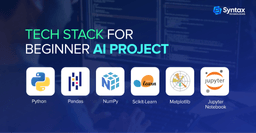
- Data handling (Pandas, NumPy)
- Simple statistics
This is your foundation in the AI engineer roadmap.
2. Pick Beginner-Friendly Domains
Start with areas that are easier to grasp:
- Basic machine learning
- Simple natural language processing (NLP)
- Introductory computer vision
These are perfect starting points for machine learning projects for beginners.
3. Focus on Problem-Solving, Not Complexity
A simple project done well is far better than a complex one done poorly.
Ask yourself:
- What problem am I solving?
- Can I explain my approach clearly?
4. Gradually Increase Difficulty
Once you’re comfortable, level up:
- Add more features
- Use better models
- Optimize performance
Growth should feel challenging—but not overwhelming.
5. Work on Real-World Datasets
Avoid toy datasets after a point. Use real data from sources like:
- Kaggle
- Government open data portals
This gives your projects more credibility.
6. Build End-to-End Projects
Don’t stop at just building a model. Go further:
- Clean the data
- Train the model
- Evaluate results
- (Optional) Deploy it
This is what real AI engineers do.
Examples of Beginner-Friendly AI Projects
Here are some great beginner AI projects to get started:
- Spam Email Classifier: Learn classification by identifying spam vs. non-spam emails.
- Movie Recommendation System: Suggest movies based on user preferences.
- Basic Chatbot: Create a simple rule-based or ML-based chatbot.
- Image Classifier: Classify images (e.g., cats vs. dogs).
- Sentiment Analysis Tool: Analyze whether text is positive, negative, or neutral.
- House Price Prediction Model: Predict prices using regression techniques.
- News Categorization System: Automatically classify news articles into categories.

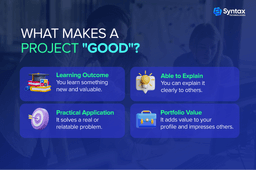
Tips to Stand Out as a Beginner
Want to go beyond average? Here’s how:
- Document Your Work
- Upload projects to GitHub
- Write simple blog posts explaining your process
- Clarity Over Complexity
Simple, clean, and well-explained projects beat complicated ones every time.
- Keep Improving
Revisit old projects:
- Add new features
- Improve accuracy
- Clean up code
- Learn from Feedback
Share your work with others and learn from their suggestions.

If you’re just starting out and feel unsure where to begin, learning through a structured program can really help. One beginner-friendly option is “AI Mastery for Everyone” by Syntax Technologies.
The workshop is designed for complete beginners and teaches how to use AI tools for writing, design, productivity, websites, and automation—without requiring any coding background.
For anyone exploring beginner AI projects or following an AI engineer roadmap, programs like this can help build confidence and practical exposure before moving into advanced AI concepts.
Conclusion
Choosing the right beginner AI projects doesn’t have to be overwhelming. Focus on simple, meaningful projects that help you learn and grow step by step. You don’t need perfection—you need consistency and understanding.
As you keep building, you’ll naturally improve your skills and gain clarity on how to become an AI engineer. Start small, stay curious, and keep going—that’s what truly makes the difference.