


You apply for a job or a freelance gig, and within a day, you get a response:
“We really like your profile. Can you complete a small test task so we can move forward?”
Sounds fair… right? You put in the effort, submit the work, and wait.
A day passes. Then another. And suddenly—it hits you. You’ve been ghosted. No feedback. No payment. No job.
This is how many online job scams actually work today—not loud, obvious, or dramatic, but subtle, professional-looking, and easy to fall for.
With the rise of remote work and freelancing, fake job offers and remote job scams have become more common than ever. And the tricky part? They often look exactly like genuine opportunities.
In this blog, you’ll learn how to identify job scams on freelancing sites, understand the difference between real recruiters and scammers, and spot critical job scam warning signs before it’s too late.


Why Job Scams Are Increasing
Job scams are rising because hiring today is faster, more digital, and easier to fake. Most communication now happens online, which makes it simple for scammers to pose as recruiters using copied job descriptions and polished profiles.
At the same time, competition in the job market has made candidates more eager to grab opportunities quickly—sometimes without verifying them fully. Scammers take advantage of this urgency by mimicking real hiring steps like test assignments or quick interviews.
Freelancing platforms have added another layer to this problem. While they’ve created more opportunities, they’ve also made it easier for fake clients to post jobs and exploit beginners through unpaid work or vague projects.
Genuine Recruiter vs Scammer: What’s the Difference?
| Aspect | Genuine Recruiter | Scammer |
| Communication | Professional, clear, no pressure | Pushy, vague, often urgent |
| Email/Contact | Official company domain | Gmail/Yahoo or slightly altered domains |
| Hiring Process | Interviews, assessments, structured steps | Instant offer or very minimal screening |
| Payment | You get paid for work | You are asked to pay first |
| Transparency | Clear job role, company details | Vague descriptions, missing info |
| Online Presence | Verified company website, LinkedIn | Little to no online trace |
Rule of thumb: If it feels rushed or too easy, pause and double-check.


Freelancing & Remote Work Scams to Watch Out For
Freelancers are especially vulnerable. Let’s break down how to stay safe.
How to Identify Job Scams on Freelancing Sites
Even on trusted platforms, scams exist. Watch out for:
- Clients asking to move conversations off-platform immediately
- Requests for free samples before any agreement
- No verified payment method
- New accounts with no reviews
Red Flags in Freelance Job Postings
- Unrealistic budgets for simple tasks
- Copy-paste job descriptions
- No clarity on deliverables
- “Long-term project” but no contract
Mini Scenario #1
You get a message:
“Hi, we love your profile. Please complete a quick sample (10-page report) to test your skills.”
You submit it… and never hear back. This is a classic unpaid work trap.
Paid Test Assignments: Legitimate vs Scam
Legitimate vs Scam Paid Test Assignments
Legitimate:
- Short (1–2 hours max)
- Clearly defined task
- Paid (or optional)
- Not used commercially
Scam:
- Large, time-consuming tasks
- No payment or vague promises
- Work used in real projects
- No feedback after submission
Mini Scenario #2
A “client” asks you to design a full website homepage as a “test.”
You deliver it—and later see your design live on their site.
That’s one of the most common work from home paid test scams.
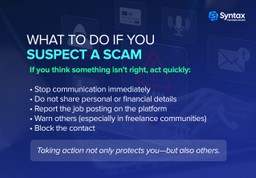
How to Protect Yourself
Here are practical freelancing safety tips you can start using today:
1. Verify the Company
- Search their website
- Check LinkedIn presence
- Look for employee profiles
2. Check Reviews
- Glassdoor, Google reviews
- Freelance platform ratings
3. Never Pay to Get a Job
- Legit companies don’t charge candidates
4. Stay on Trusted Platforms
- Avoid moving conversations to WhatsApp/Telegram too soon
5. Trust Your Instincts
If something feels off—it probably is.

Conclusion
In today’s digital world, opportunities are everywhere—but so are scams. The key isn’t to become paranoid—it’s to become aware.
Once you understand the difference between genuine recruiters and scammers, you’ll start spotting red flags instantly. Whether it’s freelance job scams, remote job scams, or suspicious paid test assignments, a little caution goes a long way.
Remember this:
A real opportunity will respect your time, your skills, and your boundaries.
A scam will try to rush, confuse, or exploit you.