
Data Engineering vs Data Analytics — Which Career Should You Choose in 2026?


The world is running on data — and companies are hungry for people who can make sense of it.
From streaming platforms recommending your next show to banks detecting fraud in real time — data is driving it all.
Two of the most in-demand roles in this space are Data Engineers and Data Analysts. Both are vital, both are rewarding — but they’re quite different in what they do.
So if you’re planning your next career move in 2026, you might be wondering: Which one’s right for me?
Let’s break it down.

What is Data Engineering?
Data Engineering is all about building the systems that make data useful.
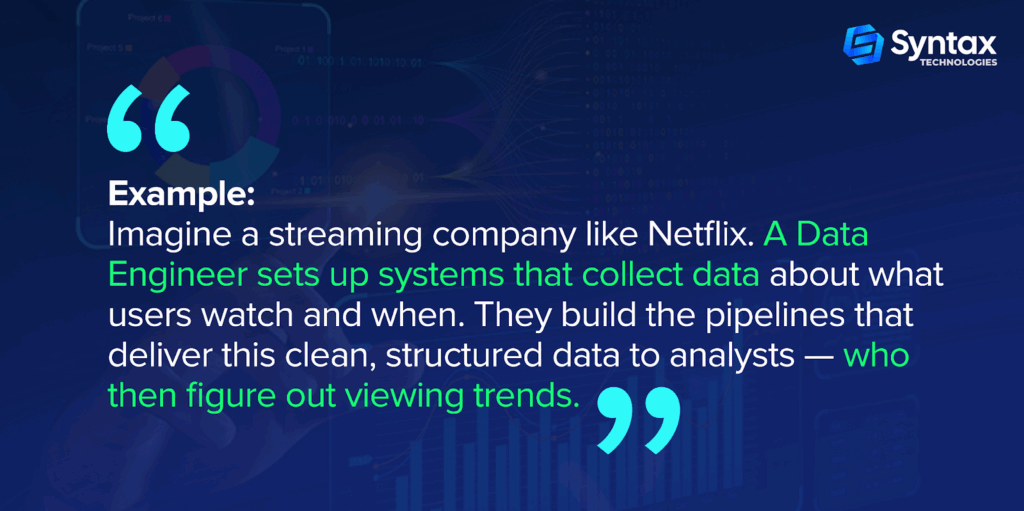
Data Engineers design and maintain the pipelines that collect, clean, and store data so that analysts and scientists can use it later. Think of them as the architects who make sure data flows smoothly and securely across a company.
Their day-to-day work involves:
- Building ETL (Extract, Transform, Load) pipelines
- Managing databases and cloud storage
- Ensuring data quality and speed
- Working with massive datasets
They often use tools like SQL, Python, Apache Spark, and cloud platforms such as AWS, Google Cloud, or Azure.
What is Data Analytics?
While Data Engineers build the pipelines, Data Analysts make sense of the data that comes out of them.
They explore, interpret, and visualize data to answer business questions — like “Which marketing campaign worked best?” or “Why are sales dipping in one region?”
Daily tasks may include:
- Querying data from databases
- Creating dashboards and reports
- Identifying trends and insights
- Sharing findings with teams or management
They commonly use tools such as Excel, Power BI, Tableau, SQL, and Python.

Key Differences Between Data Engineering and Data Analytics
Here’s a quick side-by-side view:
In short — Data Engineers make the data usable, and Data Analysts make it valuable.
Both rely on each other, and together they power a company’s data-driven decisions.
Job Market and Career Outlook in 2026
If you’re thinking long-term, good news — both careers are on the rise.
According to industry trends, demand for data-related jobs is expected to grow by over 30% through 2026, as companies rely more on AI, automation, and data-driven strategies.
- Data Engineers are essential for building the infrastructure that supports advanced analytics and AI.
- Data Analysts help organizations understand their performance and make better decisions.
Top industries hiring both roles include tech, finance, healthcare, retail, and e-commerce.
Salary-wise, the U.S. average (as of 2025 estimates) is around:
- $115K–$140K for Data Engineers
- $75K–$100K for Data Analysts
As businesses generate more data than ever before, both roles will continue to evolve — blending with fields like data science, AI, and machine learning.
Which Career Should You Choose?
It really depends on your interests and strengths.
Choose Data Engineering if you:
- Enjoy coding and solving technical problems
- Love working with databases and large systems
- Prefer backend, behind-the-scenes work
- Get satisfaction from building scalable solutions
Choose Data Analytics if you:
- Enjoy exploring data to find answers
- Like visualizing insights and telling stories
- Have strong communication skills
- Prefer working closer to business and strategy
Still unsure? Here’s a quick personality snapshot:
- Engineer = Builder and optimizer
- Analyst = Investigator and storyteller
And remember — these paths can cross. Many professionals start as analysts, learn more technical skills, and move into data engineering. Others go the opposite way — bringing technical expertise into business-focused roles.
Conclusion
Whether you choose Data Engineering or Data Analytics, you’re stepping into one of the most promising careers of the decade.
Both offer great growth, strong salaries, and endless learning opportunities. The best path is the one that fits your curiosity — whether that’s building the systems that power data or finding insights that drive change.
Ready to start your data journey?
Explore Syntax Technologies’ specialized Data Analytics program — designed to help you build in-demand skills, gain confidence, and launch a successful career in 2026 and beyond.