


Most people still think AI is mainly for coding, research, or building chatbots. But something much bigger is happening quietly in workplaces everywhere.
Marketers are using AI to summarize meetings before lunch. QA testers are generating test cases in minutes instead of hours. Product managers are turning messy stakeholder feedback into organized action items automatically. Recruiters are screening resumes faster. Analysts are using AI-driven shortcuts in data analytics to understand reports without digging through spreadsheets all day.
The biggest value of AI in 2026 isn’t just intelligence. It’s time.
And that’s exactly why businesses and professionals are rapidly adopting AI tools that save time beyond coding.
Let’s explore the unexpected ways AI is becoming the ultimate workplace time multiplier.
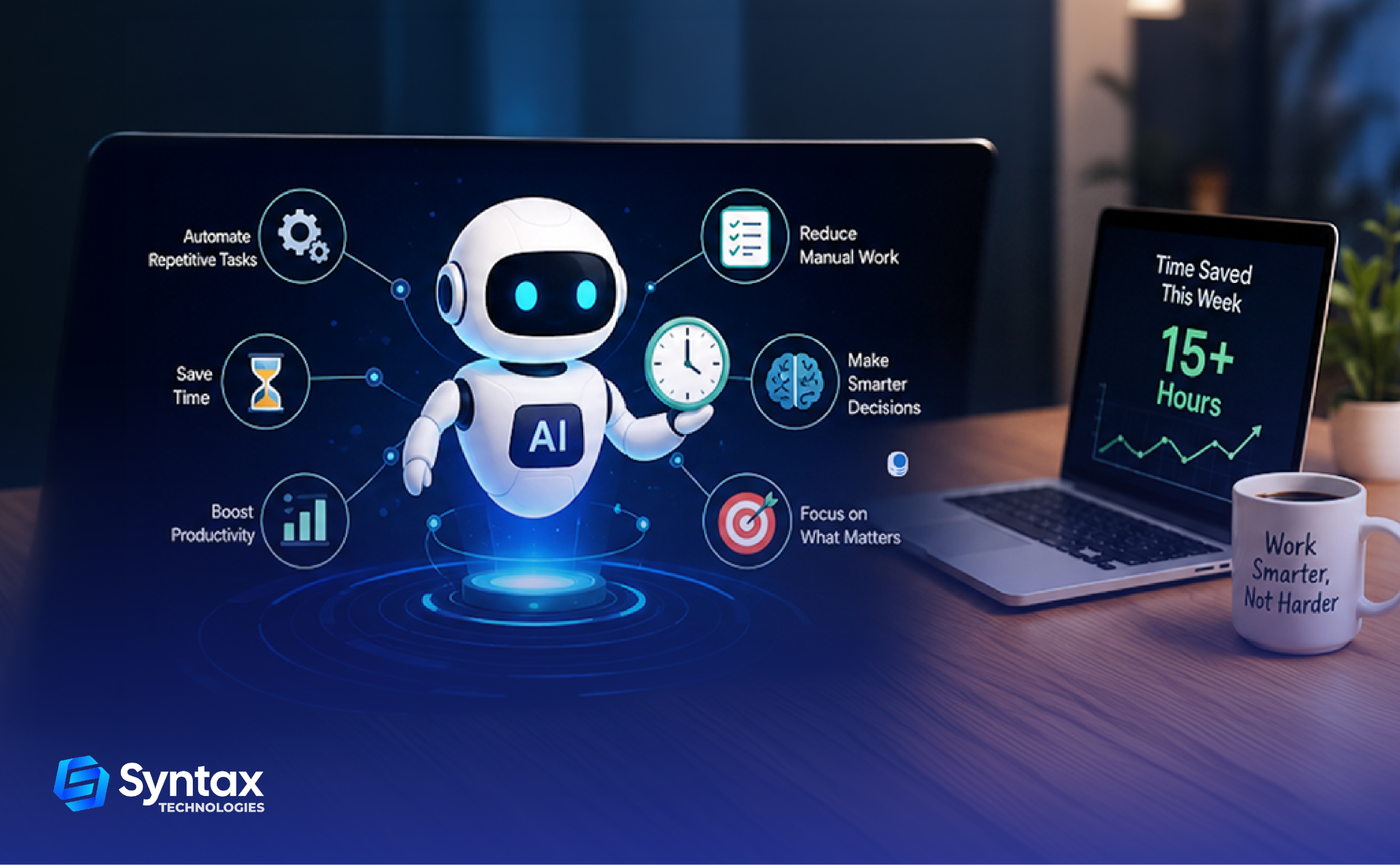
AI Is Becoming a “Time Multiplier,” Not Just a Coding Tool
Instead of replacing entire jobs, modern AI tools are removing the repetitive, low-value work that eats up hours every week. That includes documentation, status updates, repetitive communication, scheduling, reporting, and workflow coordination.
This shift explains how AI agents improve productivity across almost every industry.
For example:
- A customer support manager uses AI to summarize dozens of tickets instantly
- A project lead uses AI-generated meeting notes instead of writing recaps manually
- A recruiter automates candidate screening
- A QA engineer speeds up repetitive testing workflows
- A startup founder automates approvals and notifications between apps
This is what AI automation beyond research and coding actually looks like in real life.
It’s less about futuristic robots and more about reclaiming time.
Unexpected Ways AI Tools Save Massive Time
1. AI Is Becoming a “Context Catch-Up Machine”
One of the most unexpected ways AI saves time is by helping people instantly catch up on things they missed.
Instead of reading:
- 200 Slack messages,
- long email threads,
- Jira comments,
- meeting recordings,
- or scattered docs,
professionals now ask AI:
“What changed since yesterday?”
Tools like ChatGPT, Slack AI, and Notion AI can summarize entire workstreams in seconds.
Real example:
A product manager returning from leave no longer spends half a day reading updates manually. AI summarizes:
- blocked tasks,
- priority discussions,
- urgent bugs,
- and pending decisions instantly.
2. AI Is Quietly Eliminating “Tab Switching”
Modern work is full of tiny interruptions:
- copying data between apps,
- checking dashboards,
- rewriting the same update,
- searching for links,
- or manually updating trackers.
Individually these tasks feel small. Together they waste hours.
That’s why tools like Raycast AI, Microsoft Copilot, and Arc Browser are becoming powerful time-savers.
Instead of opening five tools manually, people can now:
- search files,
- summarize webpages,
- draft replies,
- trigger workflows,
- and pull information instantly from one interface.
These invisible micro-efficiencies are becoming one of the biggest how AI agents improve productivity stories in 2026.

3. AI Is Reducing “Decision Fatigue” at Work
Professionals make hundreds of tiny decisions daily:
- Which task matters most?
- Which email should I answer first?
- Which bug is highest priority?
- Which customer issue needs escalation?
AI tools now help narrow choices quickly.
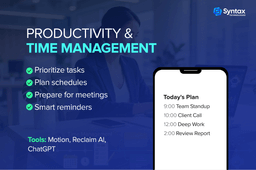
Platforms like Motion, Reclaim AI, and ChatGPT help professionals prioritize work dynamically.
Real example:
A startup founder uploads a messy to-do list and asks AI:
“What should I focus on if I only have 3 productive hours today?”
AI reorganizes tasks by urgency, dependencies, and business impact.
This is one of the most underrated ChatGPT uses for time management because it saves cognitive energy — not just time.
4. AI Is Becoming a “Meeting Filter”
AI is increasingly acting like a meeting buffer.
Tools like Otter.ai, Fireflies.ai, and Zoom AI Companion, now:
- join meetings automatically,
- generate summaries,
- identify decisions,
- extract tasks,
- and answer questions about discussions later.
Real example:
5. AI Is Turning Workflows Into “Self-Running Systems”
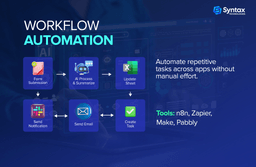
Modern tools like n8n, Zapier, and Make are allowing teams to build workflows that partially think for themselves.
This is where n8n automation and AI time savings become genuinely impressive.
Real example:
When a customer support ticket arrives:
- AI categorizes the issue
- detects urgency,
- summarizes the complaint,
- routes it to the correct team,
- drafts a response,
- and updates dashboards automatically.
Nobody manually sorts the request anymore.

Important Reality Check
Despite all the excitement, AI is not magic.
It still makes mistakes.
Human judgment remains critical.
For example:
- AI-generated summaries may miss context
- Automated reports can contain inaccuracies
- AI recommendations still require validation
- Decision-making still depends on human experience
The professionals benefiting most from AI aren’t blindly trusting it.
They’re learning how to guide it effectively.
The future likely belongs to people who know how to combine human judgment with AI efficiency.
Reading about AI is one thing. Using it effectively in real work scenarios is another.
That’s where Syntax Technologies’s AI Mastery for Everyone workshop comes in. It’s a beginner-friendly, self-paced program designed to help students, professionals, and non-tech learners use modern AI tools across productivity, writing, automation, design, websites, and workflows — without needing coding skills or a technical background.
If you’re curious about how AI can genuinely save time in daily work, this is a practical place to start.
Conclusion
The biggest advantage of AI in 2026 may not be replacing jobs — it’s giving people their time back.
What makes modern AI tools so valuable is their ability to remove everyday friction. The impact often feels subtle, but it adds up fast. Fewer unnecessary meetings, faster decisions, less manual busywork, and more focus for meaningful work.
And that’s why the real AI shift is no longer just about coding or research. It’s about helping professionals work with less friction, less overload, and far better use of their time.